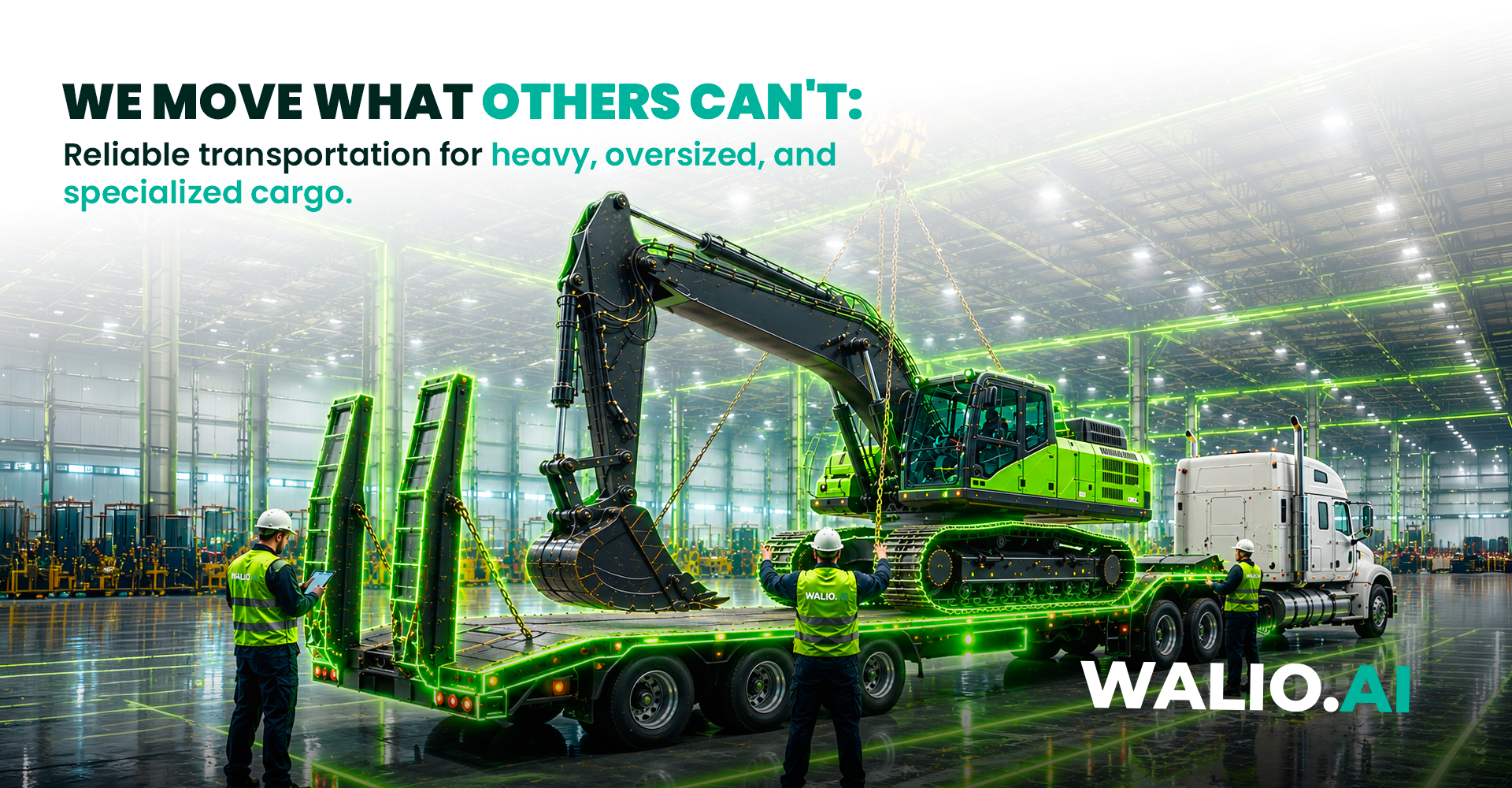
- Heavy cargo requires specialized equipment like flatbeds, cranes, and multi-axle trailers
- Special permits and documentation can take 2-4 weeks to process
- Costs can be 3-5 times higher than conventional transport
- Route planning must consider bridge, tunnel, and specific time restrictions
Quick Verdict: Heavy cargo refers to goods exceeding standard weight, dimension, or volume limits for conventional transport, requiring specialized equipment, special permits, and detailed logistics planning for safe movement.
The transportation of heavy cargo represents one of the most complex challenges in the global logistics industry. As globalization drives the trade of industrial machinery, construction equipment, and prefabricated structures, businesses face the need to move loads that far exceed conventional limits. Heavy cargo not only requires specialized equipment and specific government permits but also meticulous planning that can determine the success or failure of multi-million dollar projects. From 150-ton electrical transformers to industrial cranes of extraordinary dimensions, each shipment presents unique challenges. In Latin America, infrastructure growth and the energy industry have boosted demand for heavy cargo transport. Colombia, Mexico, and Brazil lead this segment with investments in industrial plants, wind farms, and mining projects that require high-tonnage equipment. International regulations establish specific parameters for classifying goods as heavy cargo. These limits vary by country and mode of transport, but generally include weight, dimension, and special characteristics that determine the necessary logistics procedures.
What Qualifies as Heavy Cargo in Transportation?
Heavy cargo is defined as any goods exceeding 40 metric tons (approx. 88,000 lbs) in weight, 2.5 meters (8.2 feet) in width, 4 meters (13.1 feet) in height, or 16 meters (52.5 feet) in length, requiring special permits and specialized transport equipment.
The classification of heavy cargo is based on specific parameters that exceed the capabilities of conventional transport. According to ISO International Standards, these limits are globally standardized to ensure transport safety.
Weight and Dimension Limits
The main criteria for classifying heavy cargo include: - Gross Weight: Exceeding 40 metric tons (approx. 88,000 lbs) per individual unit - Width: Greater than 2.5 meters (approx. 8.2 feet, standard road width) - Height: Exceeds 4 meters (approx. 13.1 feet, maximum height for urban bridges) - Length: Exceeds 16 meters (approx. 52.5 feet, conventional trailer limit)Heavy Cargo by Weight
40-80 tons: Standard industrial machinery
80-150 tons: Transformers and electrical equipment
150+ tons: Prefabricated structures and reactors
Oversized Cargo
Exceptional Width: Industrial tanks and modules
Exceptional Height: Wind turbine towers and columns
Exceptional Length: Structural beams and pipelines
Types of Equipment That Qualify Heavy cargo encompasses a wide range of industrial and commercial equipment:
- Construction machinery: Excavators, bulldozers, mobile cranes - Energy equipment: Transformers, turbines, diesel generators - Prefabricated structures: Industrial modules, storage tanks - Special vehicles: Articulated buses, mining trucks - Marine equipment: Ship engines, large-diameter propellersKey Differences from Other Cargo Types
It is crucial to distinguish heavy cargo from other special classifications: Hazardous Cargo vs. Heavy Cargo: - Hazardous cargo is classified by its chemical composition (explosives, toxics) - Heavy cargo is defined by physical weight and dimensions - Some loads can be both simultaneously Oversized Cargo vs. Heavy Cargo: - Oversized: exceeds dimensions but may have normal weight - Heavy cargo: exceeds weight, regardless of dimensions - The combination of both requires more complex planningPro Tip
Always classify your cargo BEFORE requesting quotes. Incorrect classification can lead to 2-4 week delays and 50-100% cost overruns.
Types of Specialized Equipment for Heavy Cargo
Key equipment includes lowboy trailers (up to 80 tons), modular trailers (up to 500 tons), mobile cranes, and SPMT equipment for extremely heavy loads.
The transportation of heavy cargo requires specialized equipment designed to distribute weight safely and comply with traffic regulations. Each equipment type has specific capacities and optimized applications.
Lowboy and Semi-Lowboy Trailers Lowboy trailers are the most common option for standard heavy cargo:
- Capacity: 40-80 tons (approx. 88,000-176,000 lbs) gross vehicle weight - Deck Height: 18-24 inches from the ground - Configuration: 2-4 axles, air suspension - Applications: Construction machinery, medium industrial equipmentLowboy trailers can transport up to 80% of all commercial heavy cargo types, making them the most versatile option on the market.
Multi-Axle Modular Trailers
For exceptional heavy cargo, modular trailers offer unparalleled flexibility: - Capacity: 100-500+ tons depending on configuration - Axles: 6-20 axles distributed to minimize pressure per axle - Modularity: Multiple units connect as needed - Control: Hydraulic systems to adjust height and levelingSPMT (Self-Propelled Modular Transporter) Equipment SPMTs represent the most advanced technology for extreme heavy cargo:
- Capacity: No theoretical limit (modules added as needed) - Autonomy: Self-propelled, no tractor truck required - Precision: Millimetric control for complex maneuvers - Applications: Refineries, industrial plants, offshore structuresSpecialized Cranes for Loading and Unloading Heavy cargo handling requires cranes with exceptional capabilities:
- Mobile cranes: 100-400 tons lifting capacity - Crawler cranes: 500-1,200 tons for special projects - Tower cranes: For on-site assembly of tall structures - Hydraulic jacking systems: Synchronized lifting of extreme loadsCritical Requirement
NEVER attempt to transport heavy cargo with insufficient capacity equipment. Overweight fines range from $5,000-$50,000 USD, in addition to the risk of fatal accidents.
Heavy Cargo Regulations and Permits
Heavy cargo transport requires special permits from the DOT in the United States, SCT in Mexico, and MinTransporte in Colombia, with processing times of 15-30 business days depending on the country.
Regulations for heavy cargo vary significantly between countries but share common goals: protecting road infrastructure, ensuring public safety, and controlling the environmental impact of specialized transport.
DOT Permits in the United States
The Department of Transportation (DOT) strictly regulates heavy cargo transport: Required Forms: - OS/OW Permit: Oversized/Overweight for loads exceeding dimensions - STAA Permit: Surface Transportation Assistance Act for specific routes - Bridge Analysis: Structural evaluation for loads exceeding 80,000 pounds Processing Times: - Standard Permits: 10-15 business days - Special Route Permits: 20-30 business days - Bridge Analysis: 30-45 additional days for extreme loadsSCT Requirements in Mexico
The Secretariat of Communications and Transportation (SCT) establishes specific regulations for heavy cargo: - NOM-012-SCT-2-2017: Maximum weights and dimensions for cargo vehicles - SCT Permit: Mandatory for loads exceeding 48.5 tons - Restricted Hours: Prohibition of circulation during peak hours (7-10 AM, 6-8 PM) - Mandatory Escorts: Pilot cars for exceptional dimensionsMinTransporte Regulations in Colombia
The Ministry of Transport of Colombia regulates heavy cargo transport through: Maximum Weights and Dimensions: - Gross Vehicle Weight: 48 metric tons (approx. 105,800 lbs) in standard configuration - Axle Weight: 11 metric tons (approx. 24,250 lbs) maximum per single axle - Maximum Width: 2.6 meters (approx. 8.5 feet) without special permit - Maximum Height: 4.4 meters (approx. 14.4 feet) on authorized routes Special Documentation: - Resolution 4100: Technical specifications for cargo vehicles - Overweight Permit: Processed through RUNT - Insurance Policy: Minimum coverage of $200,000 USD for heavy cargo Houston
(TX)
Houston
(TX)
 Monterrey
(NL)
Monterrey
(NL)
Required International Documentation
For heavy cargo in international trade, additional and more detailed documentation is required: - Special cargo manifest: Detailed technical description of the equipment - Weight certificates: Official weighing at certified scales - Dimensional drawings: Technical drawings with exact measurements - Specialized insurance: Policies covering the full value of the cargo - Handling instructions: Specific procedures for loading/unloadingHow Much Does Heavy Cargo Transport Cost?
Heavy cargo transport costs range from $3-$15 USD per kilometer (approx. $5-$24 per mile) depending on weight, distance, and complexity, making it 3-5 times more expensive than conventional transport.
The cost of heavy cargo transport is calculated using multiple variables including weight, dimensions, distance, required equipment, and logistical complexity. Prices vary significantly by region and market conditions.
Rate Structure by Mode
Land Freight per Kilometer: - 40-60 tons: $3-5 USD per kilometer (approx. $5-$8 per mile) - 60-100 tons: $5-8 USD per kilometer (approx. $8-$13 per mile) - 100-200 tons: $8-12 USD per kilometer (approx. $13-$19 per mile) - 200+ tons: $12-15+ USD per kilometer (approx. $19-$24+ per mile)Base Land Freight Costs
Short Distance (0-310 miles): Minimum rate $2,500 USD
Medium Distance (310-930 miles): $4-8 USD/km (approx. $6.4-$12.8 USD/mile)
Long Distance (930+ miles): $3-6 USD/km (approx. $4.8-$9.6 USD/mile, economies of scale)
Additional Costs
Special Permits: $500-3,000 USD per route
Mandatory Escorts: $200-400 USD per day
Specialized Insurance: 0.5-2% of cargo value
Factors Increasing Costs
The following elements can significantly increase the price of heavy cargo transport: Route Complexity: - Mountainous Routes: 25-40% increase - Restricted Urban Crossings: $1,000-$5,000 USD surcharge - Mandatory Night Hours: 15-25% additional Specialized Equipment: - High-Capacity Cranes: $500-$2,000 USD per day of use - Modular Platforms: 30-50% more expensive than standard lowboys - SPMT Systems: Up to 100% more expensive than conventional transportCost Comparison by Mode
Ocean freight for heavy cargo is 60-70% more economical than land transport for distances over 2,000 km (approx. 1,240 miles), but requires an additional 15-25 days transit time.
Break Bulk Ocean Transport: - Cost per ton: $200-800 USD depending on the route - Port Handling: $50-200 USD per additional ton - Marine Insurance: 0.3-1.2% of the cargo's CIF value
Houston
(USHOU)
 Cartagena
(COCTA)
Cartagena
(COCTA)
Specialized Insurance for Heavy Cargo Heavy cargo requires specific insurance coverages that protect both the value of the goods and civil liability:
Coverage Types: - All-Risk Transit: Covers damages during transit - Civil Liability: Protects against third-party damages - Crane Coverage: Specific for loading/unloading operations - Consequential Delays: Compensates for losses due to delays Premium Costs: - Standard Heavy Cargo: 0.5-1.2% of insured value - Ultra-Specialized Equipment: 1.2-2.5% of CIF value - Unique Projects (prototypes): 2.5-4% of total valueCost Optimization
Consolidate multiple heavy cargo pieces into a single logistics project. This can reduce total costs by 20-35% compared to individual shipments.
Heavy Cargo Route Planning
Route planning requires bridge capacity analysis (minimum 80% of limit), tunnel restrictions, permitted schedules, and coordination with local authorities.
Route planning for heavy cargo is a complex technical process that requires detailed analysis of infrastructure, local regulations, and operational conditions. A poorly planned route can result in costly delays and significant fines.
Critical Infrastructure Assessment
Bridge Analysis: - Load Capacity: Verify weight limits for specific bridges - Safety Factor: Never exceed 80% of maximum capacity - Roadway Width: Confirm sufficient space for wide equipment - Clearance Height: Measure available vertical clearance for tall loads According to data from the Port of Los Angeles, 35% of heavy cargo transport delays are due to inadequate route planning with previously unidentified infrastructure restrictions. Tunnel Restrictions: - Internal Dimensions: Verify available height and width - Hazardous Cargo Restrictions: Some tunnels prohibit certain materials - Access Hours: Many urban tunnels have specific time windows - Maximum Speeds: Special limits for oversized vehiclesSpecialized Planning Software Leading heavy cargo transport companies use specialized software:
Key Features: - Infrastructure Database: Up-to-date information on bridges and tunnels - Automatic Route Calculation: Algorithms that consider multiple restrictions - Cost Analysis: Comparison of alternatives with economic factors - GPS Integration: Real-time tracking during transportUsing specialized planning software reduces operational costs by 25% and planning time by 60% compared to manual methods.
Coordination with Local Authorities Heavy cargo transport requires close coordination with multiple authorities:
Required Prior Notifications: - Traffic Police: 48-72 hours before movement - Highway Administrators: 1-2 weeks for interstate routes - Port Authorities: Coordination for terminal access - Local Fire Departments: Notification for routes with hazardous materials Escorts and Pilot Cars: - Front Pilot Car: Mandatory for loads exceeding 4 meters (approx. 13.1 feet) in width - Rear Escort Vehicle: Required for loads exceeding 30 meters (approx. 98.4 feet) in length - Police Escort: Necessary for exceptional loads in urban areas - Radio Communication: Dedicated channel among all vehiclesStrategic Timings and Restrictions Heavy cargo often requires specific timings to minimize traffic impact:
Preferred Timings: - Early Morning (2-6 AM): Less traffic, lower temperatures - Weekends: Less congestion on urban routes - Holidays: Opportunity to use normally restricted routes Common Restrictions: - Prohibited Peak Hours: 7-9 AM and 5-7 PM in major cities - Fridays and Sundays: Restrictions on tourist highways - Specific Seasons: Limitations during road maintenance periodsCritical Planning
ALWAYS keep 2-3 alternative routes planned. 15% of heavy cargo movements require last-minute route changes due to unforeseen conditions.
Heavy Cargo by Ocean Freight: Containers and Break Bulk
Ocean freight for heavy cargo utilizes flat rack containers (up to 45 tons), open top containers (no height limit), or break bulk shipping for equipment exceeding standard dimensions.
Ocean freight offers the most economical solution for heavy cargo on international routes, especially when dimensions or weight exceed air transport capabilities. Options range from specialized containers to direct break bulk shipping.
Specialized Containers for Heavy Cargo
Flat Rack Containers: - Capacities: 20' (28 tons) and 40' (45 tons) maximum weight - Features: Collapsible or removable side walls - Applications: Machinery exceeding standard width but fitting within length/height - Advantages: Partial protection during transport, handling with standard equipment Open Top Containers: - Capacities: 20' (28 tons) and 40' (30 tons) maximum weight - Features: Removable roof with waterproof tarpaulin - Applications: Tall cargo that doesn't fit in standard containers - Limitations: Maximum internal width of 2.35 meters (approx. 7.7 feet)40' Flat Rack
Max Weight: 45,000 kg (approx. 99,200 lbs)
Dimensions: 12.19 x 2.35 x 2.35m (approx. 40' x 7.7' x 7.7')
Additional Cost: 15-25% vs. standard container
40' Open Top
Max Weight: 30,000 kg (approx. 66,100 lbs)
Dimensions: 12.03 x 2.35 x 2.70m (approx. 39.5' x 7.7' x 8.8')
Additional Cost: 10-20% vs. standard container
Break Bulk Shipping for Exceptional Heavy Cargo
When heavy cargo exceeds the capacities of specialized containers, break bulk shipping becomes the only viable option: Break Bulk Characteristics: - No Dimensional Limitations: Cargo is loaded directly onto the vessel - Extreme Capacities: Up to 1,000+ tons per individual piece - Specialized Handling: Requires high-capacity port cranes - Specific Packaging: Protection against marine environment during transit Specialized Break Bulk Ports: - Houston (USHOU): Cranes up to 400 tons, specialized in energy - Antwerp (BEANR): European hub with capacities up to 800 tons - Cartagena (COCTA): Leading Latin American port for industrial projects - Santos (BRSSZ): Brazil's main gateway for heavy machinery Hamburg
(DEHAM)
Hamburg
(DEHAM)
 Santos
(BRSSZ)
Santos
(BRSSZ)