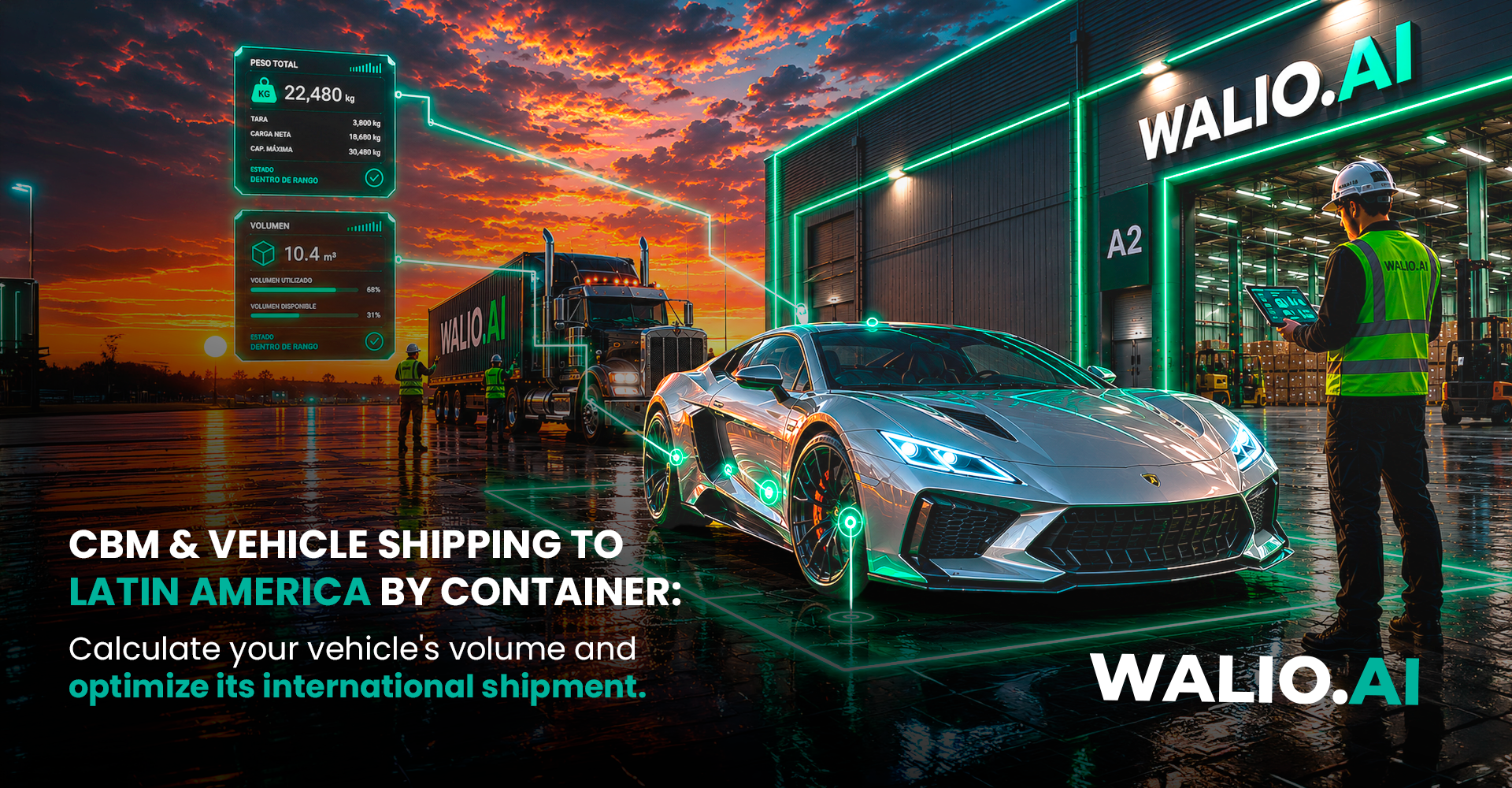
- An average car's CBM is 8-12 cubic meters depending on model and dimensions
- A 20-foot container can transport 2-4 vehicles, a 40-foot container up to 6-8 cars
- Key documents include vehicle title, commercial invoice, and certificate of origin
- Costs range from $2,500-$5,000 per container depending on the Latin American destination
Quick Verdict: Shipping vehicles to Latin America by container requires calculating CBM (cubic meters) based on car dimensions and container type. An average car occupies 8-12 CBM, allowing 2-4 vehicles per 20-foot container.
Transporting vehicles to Latin America in containers is one of the most economical and secure options for exporters and automotive businesses. The key to success lies in accurately calculating CBM (cubic meters) and optimizing container space.
For businesses handling multiple vehicles, understanding these calculations can mean the difference between profitable shipments and significant losses. Latin American markets, especially Colombia, Mexico, and Brazil, have shown sustained growth in vehicle imports from the United States.
According to data from the Container Shipping Industry, containerized vehicle transport has grown 15% annually on the United States-Latin America route over the past three years.
What is CBM and How to Calculate Vehicle Volume?
Answer Capsule: CBM (Cubic Meter) is the volume measurement that determines the space a vehicle occupies within a container. It is calculated by multiplying the car's length × width × height, typically resulting in 8-15 CBM per vehicle.
CBM is the fundamental unit of measurement for determining how many vehicles fit into a container. This metric considers the vehicle's full three-dimensional dimensions, not just its footprint.
The basic formula is:
CBM = Length (m) × Width (m) × Height (m)
For different vehicle types, typical CBM ranges are:
Compact cars: 8-10 CBM (small sedans, hatchbacks)
Mid-size sedans: 10-12 CBM (Toyota Camry, Honda Accord)
SUVs and pickups: 12-15 CBM (Ford Explorer, Chevy Tahoe)
Commercial vehicles: 15-18 CBM (vans, small trucks)
Pro Tip
Always add an additional 10-15% to the calculated CBM to account for maneuverability space and protection during transit. Shipping lines may also apply a minimum chargeable CBM regardless of actual size.
Experienced freight forwarders consider additional factors like vehicle height with antennas or special equipment. A low-slung sports car might have the same CBM as a standard sedan but require special container configuration.
Modern digital tools allow for automatic CBM calculation by entering the vehicle's make, model, and year. These databases contain exact specifications for thousands of models, eliminating manual calculation errors.
How Many Vehicles Fit in an FCL Container?
Answer Capsule: A 20-foot container transports 2-4 vehicles, while a 40-foot container can carry 6-8 cars, depending on size. The final capacity depends on each vehicle's CBM and weight restrictions.
Container capacity depends on both available volume and maximum permissible weight. Each container type has different technical specifications that directly affect how many vehicles it can transport.
20-Foot Container
- Usable Volume: 33 CBM
- Capacity: 2-4 vehicles
- Max Weight: 28 tons
- Ideal for: Compact cars and sedans
40-Foot HC Container
- Usable Volume: 76 CBM
- Capacity: 6-8 vehicles
- Max Weight: 30 tons
- Ideal for: SUVs and tall vehicles
Optimal configurations vary by vehicle type:
Compact cars: Up to 4 units in a 20-foot container with 2-level stacking
Mid-size sedans: 3 vehicles comfortably or 4 with tight configuration
Large SUVs: Maximum 2 units due to height and weight limitations
Pickups: 2-3 vehicles depending on whether they have a crew cab or extended bed
The weight factor is crucial: a large SUV can weigh 2.5-3 tons, meaning 10 vehicles would exceed the container's weight limit even if they fit by volume.
Calculate Your Shipment Instantly
Compare FCL, LCL, Air, and Courier rates in seconds.
Get a Free Quote →What Are the Costs of Shipping Vehicles by Container?
Answer Capsule: The cost to ship vehicles by container to Latin America ranges from $2,500-$5,000 for a 20-foot container, including ocean freight, port charges, and documentation. Destinations like Colombia and Mexico often have more competitive rates.
Shipping costs vary significantly based on destination, season, and port of origin. The most competitive routes from the United States include Miami-Cartagena and Houston-Veracruz due to their high service frequency.
 Miami(USMIR)
 Cartagena(COCTA)Houston(USHOU)
 Veracruz(MXVER)
Additional expenses to consider include:
THC (Terminal Handling Charges): $400-600 per container
Documentation and processing: $200-350
Transit insurance: 0.15-0.25% of declared value
Pre-shipment inspection: $150-250 per container
Agency fees: $180-300 depending on the port
Container shipping can save 20-25% compared to RoRo (Roll-on/Roll-off) services for multiple vehicles, especially on high-demand routes like USA-Colombia.
Factors most impacting price include port congestion and fuel costs. During peak season (October-December), freight rates can increase by 15-20% due to holiday demand in Latin America.
According to data from FreightWaves Logistics, routes to Brazil and Argentina maintain higher rates due to lower service frequencies and additional regulatory restrictions.
Compare Real Prices
See updated rates from multiple carriers without waiting for quotes.
View Prices →What Documents Are Required to Export Vehicles?
Answer Capsule: Essential documents include the vehicle title, commercial invoice, certificate of origin, and packing list. For Latin America, consular documents and, in some countries, vehicle emissions certificates are also required.
Correct documentation is critical to avoid customs delays that can extend delivery times by an additional 15-20 days. Each country has specific requirements that must be met precisely.
Basic Required Documents
Vehicle Title: Lien-free and in the exporter's name
Commercial Invoice: Detailed FOB value with complete specifications
Certificate of Origin: USMCA for Mexico, generic for other countries
Packing List: Detail of each vehicle by VIN and container location
Bill of Lading: Ocean freight bill of lading
Country-Specific Documents
Colombia requires a RUNT certificate for used vehicles and a Colombian consular invoice. Mexico needs a temporary import permit for vehicles on consignment. Brazil requires a certificate of conformity with Brazilian standards (PROCONVE).
Documentation for Used Vehicles
Used vehicles require a non-theft report certificate issued by local authorities. This document must be no older than 30 days at the time of shipment. Failure to provide this document can result in vehicle confiscation.
To facilitate the process, CBP Export Guidelines recommend working with certified customs brokers who are familiar with the specific requirements of each destination country.
How Do Customs Procedures Work in Latin America?
Answer Capsule: Customs procedures vary by country but generally require a local customs broker, payment of duties (10-35%), VAT, and compliance with technical vehicle standards. Colombia and Mexico typically have more streamlined import processes.
Each Latin American country has unique customs processes with varying levels of complexity and technical requirements. Advance planning can significantly reduce release times.
Duties by Country (2026)
Colombia: 10-15% depending on engine displacement and vehicle year
Mexico: 0-10% under USMCA, up to 20% without a treaty
Brazil: 20-35% plus IPI (Industrialized Products Tax)
Peru: 6-9% under trade agreements
Chile: 6% standard for new vehicles
Average release times are 3-5 days in Colombia and Mexico, 7-10 days in Brazil and Argentina, and 5-7 days in Peru and Chile. These times can extend during physical inspections or additional verifications.
Vehicle Year Restrictions
Many countries have age restrictions: Colombia allows vehicles up to 10 years old, Mexico up to 4 years for permanent import, and Brazil generally only new vehicles for commercial use.
Free trade zones offer significant benefits. In Colombia, the Cartagena Free Trade Zone allows storage without duty payments for up to 2 years. Mexico has IMMEX programs for manufacturing and export with tax benefits.
Customs broker fees range from $300-800 per vehicle depending on the complexity of the process and the destination country. These professionals are indispensable for navigating changing regulations and avoiding costly fines.
The total cost to ship a car in a container to Colombia ranges from $3,000-$4,500, including ocean freight, port charges, and documentation. This price can vary based on the port of origin and the time of year.
A 20-foot container can transport between 2 to 4 vehicles depending on their size. Compact cars allow for up to 4 units, while SUVs or trucks typically fit only 2-3 vehicles due to dimensions and weight.
The main documents are the lien-free vehicle title, commercial invoice, certificate of origin, packing list, and a non-theft report certificate. Some countries require additional consular documents.
Ocean transit time varies between 5-15 days depending on the destination. Colombia and Mexico take 5-8 days from Florida ports, while destinations like Chile or Argentina can take 12-15 days.
No, shipping personal effects inside the vehicle during container transport is not permitted due to customs and security regulations. Vehicles must be completely empty except for basic tools and a jack.
Successful vehicle shipping to Latin America depends on meticulous planning and precise CBM calculations. Modern technology allows for instant quotes and comparing options without the traditional delays of days or weeks.
With thousands of shipments processed and a presence in over 50 countries, Walio simplifies these complex processes. Our digital platform integrates automatic CBM calculations, guided documentation, and real-time tracking.
Ready to optimize your vehicle shipments? Get instant, transparent quotes at ship.walio.ai – no calls, no waiting, no complications. Compare FCL, LCL, and specialized vehicle service prices in seconds.