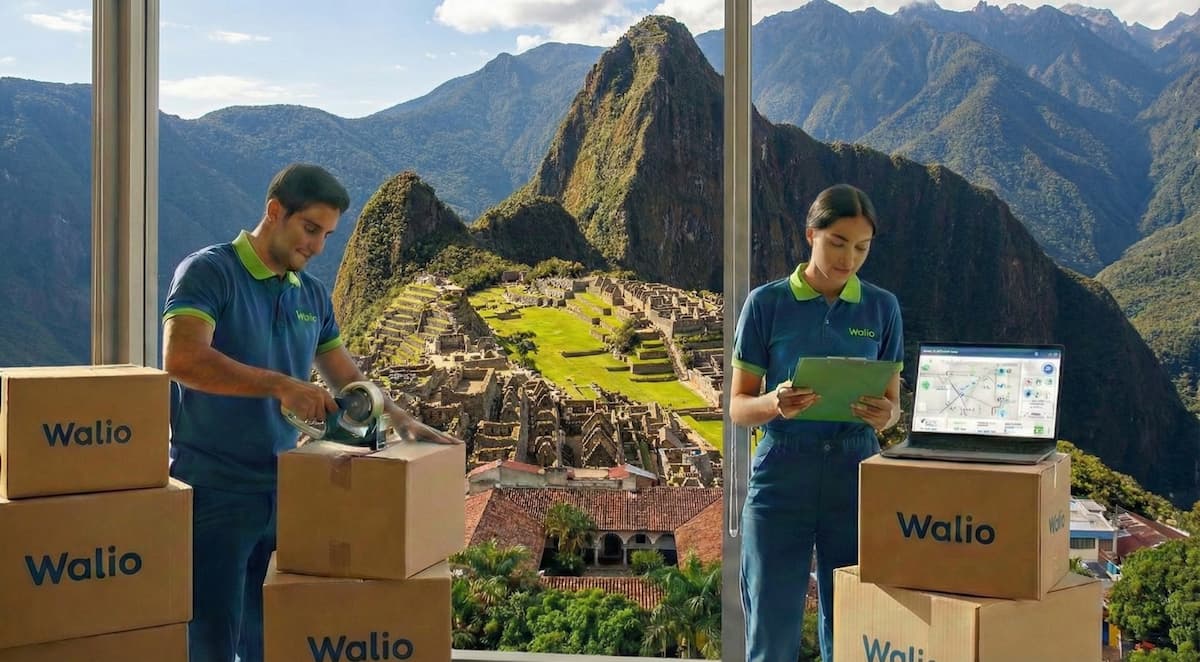
- Moving to Peru requires specific household goods exemption and documents like a valued inventory
- Average cost for a 20-foot container from the United States is $4,500-$6,500, including customs management
- Transit times range from 15-25 days depending on the origin port and final destination in Peru
- Hiring a Peruvian customs broker is mandatory for household goods clearance
Quick Answer: International moves to Peru require specific documentation, customs management, and specialized ocean freight. Typical costs range from $3,500-$8,000 for a full container from the United States, with transit times of 15-25 days depending on the origin port.
If you're planning your move to Peru in 2026, you need to understand the documentary requirements, actual costs, and specific customs procedures for this destination. Unlike other Latin American countries, Peru offers significant tax benefits for residents relocating their household goods, including an 18% IGV (Sales Tax) exemption for used items.
International moves to Peru involve navigating SUNAT Peru Customs regulations and coordinating with multiple logistics providers. The key to success lies in proper documentation preparation and selecting the right shipping method based on your cargo volume.
This guide will provide you with up-to-date information on costs, documentation, transit times, and best practices for your move to Peru, based on thousands of shipments processed on the United States-Peru route during 2025-2026.
What Documents Do I Need for My Move to Peru?
Quick Answer: For moving to Peru, you need: a valid passport, residency visa, a valued inventory in Spanish, a marriage certificate (if applicable), and proof of Peruvian address. All documentation must be apostilled in the country of origin before shipping.
The documentation for moves to Peru is more rigorous than other Latin American destinations due to the tax benefits available to residents. SUNAT requires specific documentation to grant the IGV exemption for household goods.
- Valid passport with permanent or temporary residency visa for Peru
- Detailed valued inventory in Spanish with description and value of each item
- Apostilled marriage certificate (for joint household goods of spouses)
- Proof of address in Peru (rental agreement or property deed)
- Single Customs Declaration Form (DUA) completed by the customs broker
Critical Documentation
The valued inventory must include the brand, model, condition, and approximate value of each item. Documents not apostilled will be rejected by SUNAT, causing additional delays of 15-30 days.
For residents returning to Peru after living abroad for more than two years, additional certification from the Peruvian consulate in the country of origin is required. This document certifies your returning Peruvian resident status, ensuring access to special tax benefits.
The valued inventory must be meticulously prepared, as SUNAT may request physical inspection of 15-20% of shipments. Undeclared or undervalued items result in fines of 50-200% of the omitted value.
How Much Does an International Move to Peru Cost in 2026?
Quick Answer: The cost of moving to Peru varies by volume and origin: $4,500-$6,500 for a 20-foot container from the United States, $6,000-$9,000 from Spain, including ocean freight, customs management, and door-to-door delivery.
Moving costs to Peru in 2026 reflect increases of 12-15% compared to 2025, primarily due to higher fuel costs and new customs regulations. The shipping method (FCL vs LCL) significantly impacts the total cost.
 Miami
(USMIR)
Miami
(USMIR)
 Callao
(PECLL)
Los Angeles
(USLAX)
Callao
(PECLL)
Callao
(PECLL)
Los Angeles
(USLAX)
Callao
(PECLL)
Detailed Cost Breakdown
- 20-foot container (FCL) from the United States: $4,500-$6,500 all-inclusive
- 40-foot container from the United States: $7,000-$10,000 with full management
- Consolidated cargo (LCL): $180-$250 per cubic meter plus local charges
- Additional expenses in Peru: $800-$1,200 for customs broker and local delivery
- Cargo insurance: 0.3%-0.5% of the declared value of household goods
FCL (Full Container Load)
Advantages: Greater control, no additional handling, ideal for complete family moves. Costs: Fixed regardless of the volume used.
LCL (Less than Container Load)
Advantages: Pay by actual volume, economical for small shipments. Disadvantages: More handling, additional 5-7 days transit time.
How Does the Household Goods Customs Clearance Process Work in Peru?
Quick Answer: Household goods customs clearance in Peru requires an authorized customs broker, offers tax exemption for residents, and takes 3-5 business days. SUNAT grants an 18% IGV (Sales Tax) exemption for used household goods of returning residents.
The customs clearance process for moves to Peru is unique in Latin America due to the tax benefits available. SUNAT has implemented digital processes that significantly streamline procedures for residents' household goods.
- Hiring a customs broker - Mandatory to use a SUNAT-authorized agent for household goods processing
- Document submission - The broker submits the DUA and supporting documentation to SUNAT
- Document review - SUNAT verifies eligibility for the 18% IGV exemption
- Physical inspection (optional) - Conducted based on SUNAT's risk criteria
- Cargo release - Once approved, port withdrawal is authorized
Key Tax Benefit
The 18% IGV (Sales Tax) exemption automatically applies to used household goods of Peruvian residents or foreigners with legal residency. This benefit can represent savings of $500-$2,000 depending on the declared value.
Realistic Customs Clearance Times
- Document review: 1-2 business days with complete documentation
- Physical inspection (if applicable): 1-2 additional days
- Total process: 3-5 business days at Callao Port
- Free storage: First 7 days at port
- Additional storage: $15-25 per day after the free period
SUNAT uses a traffic light system to classify shipments: green (70%) passes without inspection, orange (25%) requires additional document review, and red (5%) needs a full physical inspection.
What Items Are Prohibited or Restricted for Moving to Peru?
Quick Answer: Peru prohibits importing weapons, drugs, perishable foods, live plants, and animal products without SENASA certification. Used vehicles require special procedures and age restrictions depending on the model.
Restrictions for moving to Peru are strict in specific categories, especially agricultural and sanitary products due to the protection of Peruvian biodiversity. SENASA (National Agrarian Health Service) strictly regulates animal and plant products.
TOTALLY PROHIBITED
- Weapons, ammunition, and explosives
- Drugs and psychotropic substances
- Toxic products and hazardous materials
- Counterfeit currency
- Child pornography material
RESTRICTED with Permit
- Canned and processed foods
- Medications (require medical prescription)
- Plants, seeds, and agricultural products
- Animal products
- Telecommunications equipment
Used Vehicles - Critical Restriction
Maximum 5 years old for private vehicles. Commercial vehicles have additional restrictions. The process requires technical inspection, certificate of origin, and payment of specific tariffs of 0-20% depending on origin.
Agricultural Products and SENASA
SENASA requires a phytosanitary certificate for any plant product, including spices, teas, or wood products. The certificate must be issued in the country of origin a maximum of 14 days before shipment.
- Animal products: Mandatory SENASA sanitary certificate
- Live plants: Require 30-60 days quarantine in SENASA facilities
- Processed foods: Prior sanitary registration for commercial products
- Home appliances: No special restrictions, only voltage verification (220V in Peru)
What Are the Best Ports for Moving to Peru?
Quick Answer: The main ports for moving to Peru are Callao (Lima) as the primary gateway, Paita for the north, and Matarani for the south. Callao offers better land connections and more comprehensive logistics services.
Selecting the destination port for your move to Peru significantly impacts final costs and delivery times. The Port of Callao handles 75% of international moves due to its superior infrastructure and proximity to Lima.
Lima
(PECLL)
Piura
(PEPIO)
Port Comparison for Moves
Port of Callao (Lima)
- Greater infrastructure and specialized services
- 35+ customs brokers specializing in household goods
- Direct land connections to the entire country
- Faster customs clearance times (3-5 days)
Port of Paita (North)
- Local costs 15-20% lower than Callao
- Ideal for destinations in Piura, Chiclayo, Trujillo
- Less port congestion
- More limited services for moves
Transit Times by Port
- Miami → Callao: 12-15 days direct, 18-22 days with transshipment
- Los Angeles → Callao: 14-18 days direct, weekly connections
- New York → Paita: 16-20 days with transshipment in Panama
- Houston → Callao: 13-16 days, best option for Texas
Matarani Port (south) primarily handles mining cargo with limited services for moves. Only recommended for specific destinations in Arequipa, Cusco, or Puno, with additional surcharges of $300-500.
How to Pack Correctly for an International Move to Peru?
Quick Answer: Packing for moves to Peru must withstand 15-25 days of ocean transit and tropical climate. Use reinforced boxes, moisture protection, and detailed labeling in Spanish to facilitate customs inspection.
Packing for moves to Peru faces unique challenges: long ocean transit times, humid port climates, multiple handling, and potential customs inspection. Proper preparation prevents damages that account for 8-12% of insurance claims.
Weight Rule for Ocean Moves
Maximum 18kg (approx. 40 lbs) per box facilitates manual handling and reduces damage risk. Heavier boxes require mechanical handling, increasing costs and risk of damage.
Recommended Packing Materials
- Reinforced cardboard boxes - Double-walled minimum, moisture-resistant
- Moisture protection - Silica gel packets and protective plastic
- Bilingual labeling - Detailed content in Spanish for inspection
- Complete disassembly of furniture - Hardware in labeled bags
- Photographic inventory - Documentation for insurance and verification
Specific Techniques for Tropical Climates
- Clothing and textiles: Vacuum bags + silica gel packets against humidity
- Electronics: Original packaging when possible, anti-static protection
- Important documents: Sealed plastic sleeves and digital copies
- Books: Small boxes (maximum 10kg / 22 lbs) with rigid dividers
- Glassware: Individual bubble wrap + cardboard dividers
Professional packing reduces damage by 85% compared to DIY packing. An additional investment of $200-400 in materials prevents average claims of $1,200-2,500.
Plan Your Professional Move
Get detailed quotes including packing services and insurance.
Compare Options →How to Get the Best Quote for Your Move to Peru?
Quick Answer: To get the best moving quote to Peru, provide a detailed inventory, specific origin and destination, and flexible dates. Compare door-to-door vs. port-to-port services and request a full cost breakdown.
Getting competitive quotes for moves to Peru requires a specific strategy. Prices vary 25-40% among providers due to different cost structures, port alliances, and included services.
Essential Information for Accurate Quotes
- Detailed inventory: Estimated weight and volume of all items
- Specific addresses: Exact zip codes for origin and destination
- Tentative dates: 2-3 week windows improve rates
- Additional services: Packing, unpacking, temporary storage
- Cargo value: For accurate insurance calculation
FCL vs LCL Service Comparison
FCL - Recommended For:
- Complete family moves (+15 cubic meters)
- Fragile or high-value items
- Non-flexible specific dates
- Budget of $4,500+ available
LCL - Recommended For:
- Small moves (-10 cubic meters)
- Limited budget ($2,000-4,000)
- Flexible dates (±1-2 weeks)
- Items not extremely fragile
Instant online quotes like ship.walio.ai offer average savings of 45% versus traditional phone quotes, eliminating intermediary margins.
Key Questions for Providers
- Does it include full customs management in Peru?
- Does it cover local customs broker costs?
- Does it include door-to-door delivery or only port-to-port?
- What insurance coverage is included at no additional cost?
- Are there hidden costs for delays or inspections?
Seasonal Optimization
Low season (March-May, September-November) offers 15-25% lower rates. Avoid December-February (high season) and July-August (European holidays) for better prices.
A complete move to Peru takes between 25-40 days from packing to final delivery. This includes 3-5 days for preparation and packing, 15-25 days for ocean transit, and 7-10 days for customs clearance and local delivery at the destination.
Yes, insurance is highly recommended for moves to Peru due to the long ocean transit. The cost is 0.3%-0.5% of the declared value and covers damages, losses, and delays. Many companies include basic coverage, but full coverage is recommended.
Yes, you can include your vehicle in your move to Peru, but it requires additional procedures and the car must be a maximum of 5 years old. The process includes technical inspection, certificate of origin, and payment of specific tariffs for used vehicles.
If your household goods arrive damaged in Peru, you must immediately report it to the customs broker and moving company, take detailed photos, and file a claim with the insurance within 7 days. The inspection is carried out in the presence of the recipient to document damages.
Yes, you can make partial moves to Peru using consolidated cargo (LCL) starting from $180 per cubic meter. It is ideal for small shipments or when you don't need a full container. The customs process is the same, but transit times may be 5-7 days longer.
Your move to Peru in 2026 will be successful with proper planning and selecting the right provider. Peruvian tax benefits for residents make this destination particularly attractive for returning expatriates.
The key is to prepare documentation in advance, select the appropriate shipping method for your volume, and work with providers who understand the specific regulations of US Customs and Border Protection and SUNAT.
Ready to get your quote? Use ship.walio.ai to compare FCL, LCL, air, and courier options in seconds. No phone waits, no quotes that take days. Get real, transparent prices to plan your move to Peru with total confidence.